Are you reactive or proactive?
Among the workforce retention factors other than a sense of commitment, the possibility of advancement, recognition and salary, there are working conditions.
It is this especially factor that helps keep our employees coming to work. In addition to the fact that an employee enjoys their job, doing it with ease regarding their health and safety increases their commitment to the company and the length of time they will remain there.
(The rest of the article is only available in French)
Quality requirements and competitiveness being more aggressive and more present than before (globalization) force production companies to always increase their productivity and the quality of their products. And unfortunately, health and safety in the workplace have a bite.
Relegated to the rank of lesser importance, the "health and safety" file is the least cherished child of all. The business manager prefers to deal with incidents (accidents = injuries) punctually when they occur. And often, it is when there is an increase in incidents that the CNESST penalizes the company and thus forces it to implement health and safety principles. And one of the principles is the considerable reduction of repetitive movements that can develop ailments and injuries resulting in an increase in the absenteeism rate and premature retirement.
Of course, ergonomics does not necessarily increase productivity, but it does allow the retention of human capital, which is the backbone of a company.
This is not new: technology is, and has always been, at the service of humans, and the relationship between man and machine is familiar to us. We know that our resources in terms of labor in manufacturing production are suffering from a serious decline, and the younger generation wrinkles its nose in disgust at any work containing the 3 D:
"Dull" for boring
"Dirty" for dirty
“Dangerous” for dangerous.
But while waiting for the robot to take over the 3Ds and possibly the 4th D: "Dear" for expensive tasks, we can limit the damage by ensuring that we have safe and ergonomic working conditions for our workers.
How? By involving certain lifting and handling tools in the performance of certain tasks.
As an example, here is what happened at our client's: the company had a bone meal (fertilizer) production line. It carried out the packaging manually. The worker responsible for this task (4 workers in total) took one by one the small buckets (weighing 1 kg/each) that arrived on a conveyor in order to palletize them. Towards the end of this procedure, that is to say several rows later, the small bucket began to weigh a lot, not because the weight had changed in the meantime, but because of the repetitive and continuous movement giving the impression.
If we look a little closer at the work of this man, his movements looked like this: grab the boiler, bend down to put it down, get up again and start again. Once at a certain height, the stacking required the worker to lift the load and stretch his arm as far as possible to finish his work.
After several hours of repeating the same movement, the pain began to imprint itself in the worker's wrist, arm and back. And a pain that persists becomes an ailment that ends up handicapping the worker. And in the long run, this pain will end up becoming part of him and will prevent him from sleeping and doing his job well. The days of absence will accumulate and the pleasure at work will decrease. His productivity will suffer. And replacing him will cost the employer more than taking care of him from the start.
The solution proposed to this company?
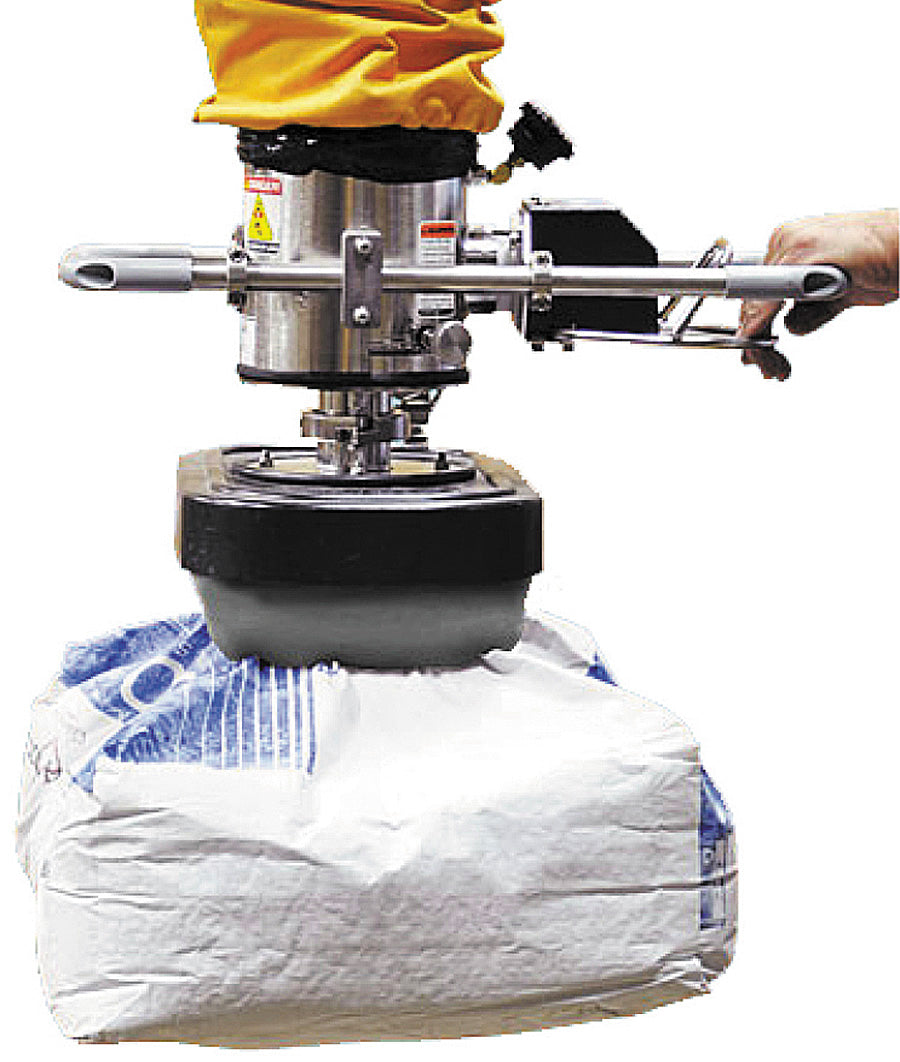
A vacuum tube lifting system with a control handle for picking up the goods. And its use required no effort on the part of the worker to pick up and put down the boilers.
And for the stacking of the goods? A spring-loaded pallet lift table . The table lowered gradually when loaded and rose when unloaded. This simple table helped to greatly reduce the fatigue caused by repeated lifting and bending of the worker.
Industrial ergonomics is not the first thing we think about when we are growing, innovating and competing with the world, but it is the thing that will have the most impact on the engagement and sense of belonging of our workers.
Adapting production means to operators is what we call ergonomics. Is it easy? No, but it is brilliant when you want to go far with your company.